
Getting Men to Open Up: Group Therapy Topics That Actually Work
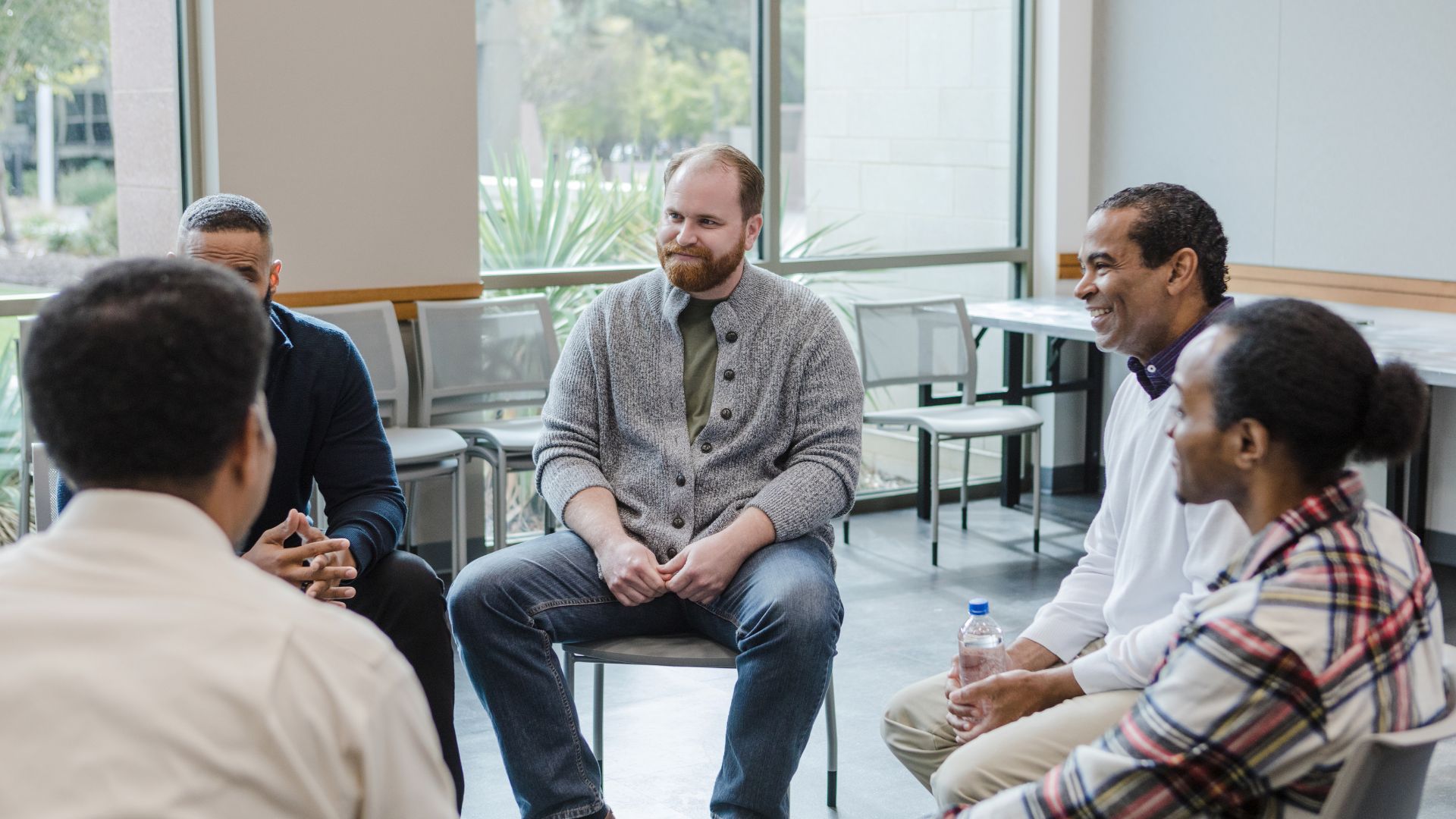
Put eight men in a circle of chairs and ask them how they feel, and the room tends to go quiet. Nobody is being difficult. Many men simply never learned a vocabulary for what happens inside them, and a blank invitation to share feels like a test they might fail. A group leader who starts with the right subject can change that within a session or two.
Why does the topic list matter?
A group is only as useful as what gets said in it. Open-ended prompts reward the people who are already comfortable talking, while everyone else waits for the hour to end. Concrete subjects give each man something to hold, and a topic about work or fatherhood lets a man speak about feelings without having to announce that he is about to discuss his feelings.
Treatment programs for men often publish their own lists of men's group therapy topics, and reading one is a useful way for families and referrers to understand what daily life in a program looks like. The topics below draw on common clinical practice and are meant as a guide to what tends to work, not as a script for any single program. A good list also protects the leader. Facilitators who arrive with a plan for the first month are less likely to fall back on whatever the loudest man wants to discuss, and members can see the arc, which makes it easier to commit.
Why do men hide their feelings?
The American Psychological Association’s overview of its guidelines for boys and men makes two points that matter for group work. First, it says that traits often linked with masculinity, including courage, strength, compassion, leadership and assertiveness, are associated with positive psychological and behavioral health. Second, it says some masculine social norms can have negative consequences, and that rigidly suppressing emotions is linked to more risk-taking and inappropriate aggression.
The same page says that men and boys who are taught to bury their feelings are less willing to seek help for psychological distress, which means many who need help are not getting it. The association states that it hopes more men and boys will hear that seeking help is acceptable and also shows strength. The guidelines are written for psychologists, though the association says men, boys and their families may find them useful too.
For a group leader, the practical lesson is to build on strengths men already value. A man who prides himself on reliability can be invited to apply that quality to honesty, and a man who prizes loyalty can be shown that loyalty includes telling a brother in the room when something is wrong.
Topics that tend to open a room
Work and worth usually come first. For many men, identity is tied to a job, a paycheck, or a role as provider, so losing one can feel like losing oneself. A session on what a man does when he is not working, and who he is without the title, brings out grief, fear, and humor in roughly equal parts.
Fathers come next, both the ones men had and the ones they are or hope to be. Men who grew up with an absent, harsh or silent father often carry unspoken rules about emotion, and naming those rules aloud loosens them. Men who are fathers themselves tend to speak with unusual honesty about guilt and hope, since the stakes feel personal.
Anger deserves its own session, because it is often the only emotion a man has permission to show. Group members can learn to trace anger back to what sits beneath it, such as fear, humiliation, or sadness, and to practice noticing the early signs in the body. Grief and loss work well too, covering deaths, divorces, friendships that ended, and years spent in active addiction.
Later in the process, groups can take up honesty in relationships, intimacy and sexuality handled with care, faith or purpose, money and responsibility, and what accountability means in daily life. Each topic gives men a way into emotional material through a practical door.
How facilitators make it feel safe
Safety comes from structure. Clear ground rules about confidentiality, no interrupting, and no fixing other people’s problems let men take small risks and see that nothing bad follows. A short check-in at the start of each session, with a number or a single word to describe the week, gets everyone’s voice into the room early.
Modeling matters as much as rules. When a staff member or a peer leader goes first and says something honest, such as admitting a bad week or a mistake, other men take it as permission. Many men also open up more easily while doing something, so groups that include a walk, a shared task or an activity alongside conversation can lower the pressure of eye contact.
Silence should be allowed. A leader who rushes to fill every pause teaches the group to wait for rescue, whereas a leader who sits comfortably in the quiet signals that the group can wait too.
Topics that need extra care
Some subjects should not be rushed in a group. Detailed accounts of trauma can overwhelm the speaker and unsettle listeners who have their own histories, so group leaders usually keep the focus on how experiences affect the present and leave deeper processing to individual therapy. A man should never feel pressured to confess before he is ready.
Programs also need to watch for men who dominate, men who joke their way out of every serious moment and men who withdraw. Each pattern tells the leader something, and each calls for a gentle response in the room or a separate conversation afterward. Group work works best alongside individual therapy, medical care and attention to any co-occurring conditions such as depression or post-traumatic stress. Substance use groups raise a particular risk, because war stories about drinking or using can slide into nostalgia, so leaders should steer such talk toward consequences and what each man would do differently.
Signs that a group is working
Progress shows up in small changes. Men begin to speak in terms of feelings instead of facts; they ask each other questions, and they follow up outside the formal session. Attendance holds steady, and humor becomes warmer instead of deflecting. Another good sign is that men start applying what they hear. A man who reports trying a new way of handling anger at home, or calling his father after years of silence, shows that the group has moved from talk to practice, and the leader can build on that.
Families and referrers can ask a program for its group schedule, the topics it covers, how groups are led and how confidentiality is handled. If a man is in crisis or thinking about suicide, the right step is outside the group, so call or text 988 or call 911. For help finding a program, the SAMHSA National Helpline at 1-800-662-4357 is free and open at all hours.

WEBSITE DESIGNED BY FRAAME SOLUTIONS COPYRIGHT © 2008. HEALTH SERVICES ASSESSMENT COLLABORATION. ALL RIGHTS RESERVED. |
DISCLAIMER l |